How to Deal With Tantrums: 7 Fast, Science-Backed Techniques That Actually Work
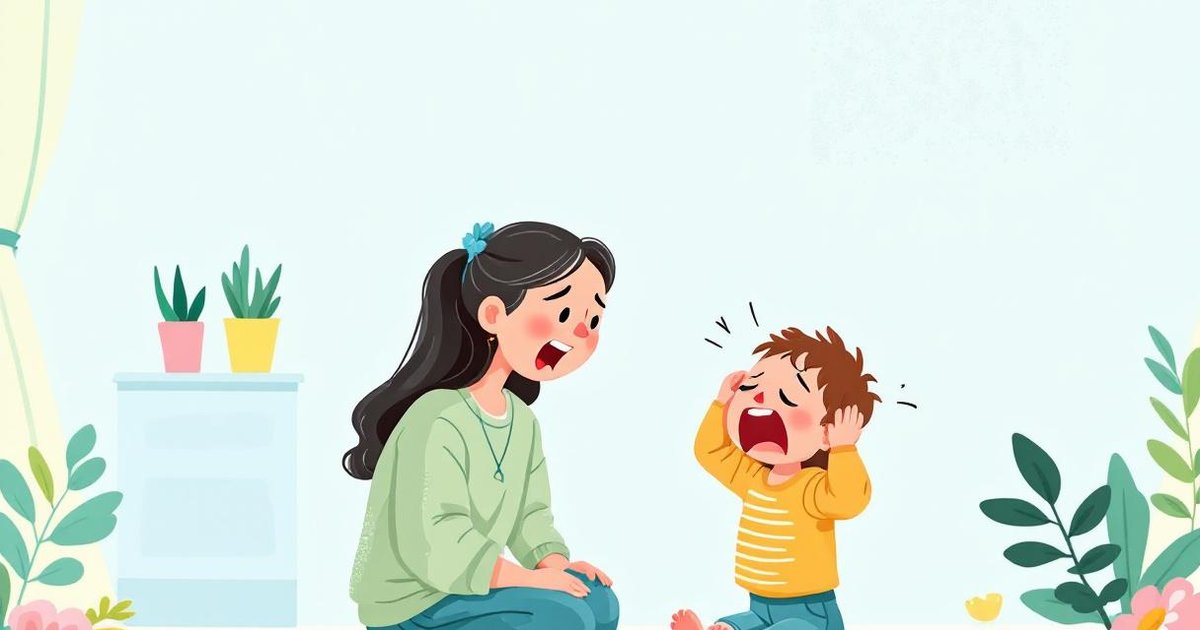
If you have ever carried a screaming 4-year-old out of a grocery store like a flailing sack of potatoes, this post is for you.
Tantrums are normal. But that does not mean they are easy. Learning how to deal with tantrums is not about becoming a perfect, always-calm grown up. It is about having simple, real-world tools you can grab fast when the volume rises.
Let’s be honest: nothing tests your will to live—or at least your ability to maintain eye contact with strangers—like a tantrum.
Whether your child is on the floor screaming because you cut their sandwich the wrong direction, or they’ve melted down at Target because you dared to walk past the toy aisle without a ceremonial offering, we’ve all been there.
But this doesn't have to ruin your day.
Here are research-backed techniques to stop tantrums faster, reduce how often they happen, and protect your own sanity in the process. We will talk about what is actually happening in your child’s brain, what to do in the moment, and how to prevent some meltdowns before they start.
You will feel more confident about how to deal with tantrums and meltdowns. Take a deep breath. You have got this.
Why Kids Have Tantrums
Before we jump into how to stop tantrums fast, it helps to know what is going on under the hood. A tantrum is not proof your child is spoiled, manipulative, or destined for a reality show. It is usually a sign that their brain is overwhelmed.
In early childhood, the part of the brain in charge of logic, planning, and impulse control (the prefrontal cortex) is still “under construction.” The emotional part of the brain, however, is fully open for business. When a preschooler or early elementary child is tired, hungry, overstimulated, or disappointed, their emotional brain can hijack the whole system. The result: screaming, crying, hitting, dramatic floor-flopping, or all of the above.
Research on self-regulation and child development shows that kids learn to calm themselves through co-regulation first. That means they borrow your calm until they can eventually create their own. When you are thinking about how to deal with tantrums, your calm presence is not just nice, it is actually a teaching tool for their developing nervous system.
So no, your child is not trying to ruin your trip to the store. Their brain is shouting, “This is too much!” in the loudest language it knows.
Technique 1: Get Calm First
You: A Zen Master. Your child: a tiny tornado.
Preschoolers react like tiny mirrors: the louder they get, the calmer you must become.
This is not fair, but it is effective.
Say something slow and steady like:
“You’re having big feelings. I’m right here when you’re ready.”
Your calm tone helps regulate their nervous system.
Even if inside you are screaming into the void.
How to do it in the moment
- Pause for 5 seconds. Literally count in your head: “1-2-3-4-5.” This tiny gap keeps you from reacting on autopilot.
- Take 2 slow breaths. Inhale through your nose for 4 counts, exhale through your mouth for 6. Longer exhales tell your nervous system, “We are safe.”
- Say a quiet script to yourself. Try: “This is not an emergency,” or “My child is having a hard time, not giving me a hard time.”
This sounds small, but it changes everything. When you look regulated, your child’s nervous system gets a message: “The grown up is steady. I can borrow that steady.”
What this looks like in real life
- At home: Your 4-year-old is on the floor screaming about the blue plate. You feel your frustration spike. You turn away for a moment, take two slow breaths at the sink, then come back and kneel down.
- In the classroom: A student refuses to come to circle time. You feel the eyes of 19 other children on you. You pause, plant your feet, breathe, and speak in a lower, calmer voice instead of raising yours.
- In a home-school group: Your child shouts “No!” when it is time to clean up the craft area. You inhale, exhale, and remind yourself, “I can be calm even if they are not.”
Technique 2: Connect Before You Correct
When kids are losing it, our instinct is to explain, lecture, or fix it with logic. The problem is, their emotional brain has temporarily shut the door on logical language. To stop tantrums faster, you need connection first, instructions second.
Use “I see” statements
Start by noticing and naming their experience:
- “I see you are really upset about leaving the playground.”
- “You really wanted that toy. It is so hard to hear no.”
- “You are angry that he got the red marker. You wish it was your turn.”
This does not mean you agree with their demand. You are just showing that you get it. Brain research suggests that when we label emotions, it reduces intensity in the emotional centers of the brain. Simple validation can start to turn the volume down.
Offer warm, nonverbal comfort
- Get down to their eye level if it is safe.
- Soften your face and voice.
- Offer a hug or say, “I am here if you want a hug,” so you are not forcing touch.
Teachers and home-schoolers can still use connection, even with boundaries in place: a hand on the back, a gentle nod, or, “I can see you are upset. I am right here while you calm your body.”
Why it works
Connection tells your child’s nervous system, “You are not alone with this big feeling.” Once they feel seen, they are far more likely to listen, follow directions, or accept a limit. If you are wondering how to deal with preschool tantrums in a way that also builds long-term emotional intelligence, this step is key.
Technique 3: The Calm-Down Plan
Children are basically tiny humans who crave power but lack wisdom.
In the middle of a meltdown, kids need a clear, simple path to calming their bodies. “Stop it right now” is not a plan. It is a wish.
Instead, create a calm-down plan that you practice when everyone is already calm. This works beautifully at home, in classrooms, and in home-school spaces.
Build a “calm corner” or “peace spot”
- Choose a spot: A cozy chair, a beanbag, a corner with soft pillows, or a small table with sensory toys.
- Add calming tools: A stuffed animal, stress ball, glitter jar, simple coloring pages, noise-reducing headphones, or picture books about feelings.
- Give it a friendly name: “Peace Place,” “Cozy Corner,” “Chill Chair,” or “Calm Cave.” Avoid making it sound like punishment.
Practice when everyone is happy
Walk your child or students through the calm spot when they are in a good mood:
- “When your feelings get really big, this is a place you can go to help your body calm down.”
- “You can squeeze this ball, hug the bear, or take 5 balloon breaths.”
Use it during a tantrum
- Calm voice: “Your body is not safe right now. Let’s go to the Cozy Corner to help you calm.”
- Offer a choice if possible: “Do you want to walk or hop to the Cozy Corner?”
The key is that the calm spot is for regulation, not isolation. Adults stay close enough to supervise and offer connection. Over time, kids internalize, “When I feel out of control, I have strategies that help.” That is the heart of learning how to deal with tantrums in a healthy way.
Technique 4: The “Yes-Within-a-No” Strategy
Most tantrums happen because a child hits a wall of “No.” No more TV. No, we cannot buy that toy. No, you cannot have 6 snacks before dinner. Limits are necessary, but how you communicate them can either pour gasoline on the tantrum or gently cool it down.
The “Yes-within-a-No” approach keeps your boundary, while giving your child a sense of choice and power.
How it sounds in real life
- TV time is over: “We are all done with TV for today. You can choose to play with blocks or color at the table. Which one do you pick?”
- In the classroom: “It is not time for the blocks right now. Yes, you can choose blocks during centers after reading, or you can draw a picture of what you want to build.”
- At the store: “We are not buying toys today. Yes, you can take a picture of it and we can add it to your birthday list when we get home.”
This technique respects your child’s need for autonomy while keeping clear limits. Children are more likely to accept a boundary when they feel like they still have some control inside of it.
Why it helps tantrums end faster
When kids hear only “No, no, no,” their emotional brain gears up for battle. When they hear, “No to that, yes to this,” their brain sees options instead of a dead end. It is one of the most effective ways to deal with tantrums in daily routines without getting stuck in endless power struggles.
Technique 5: Use Play and Humor to Diffuse the Bomb
You know that moment when you can feel a tantrum creeping in but it has not fully exploded yet? This is where play and humor can work magic.
Brain research shows that playfulness reduces stress hormones and increases connection. Plus, kids are wired to respond to silliness. When used intentionally and respectfully, humor can redirect a brewing meltdown.
Playful strategies to try
- The Robot Routine: When a child resists transitions, try: “Time to clean up! Uh oh, my robot arms are broken. I can only pick up blue things. Beep boop!” Kids often jump in to “fix” you.
- The Silly Voice Switch: For a reluctant preschooler: “It is time to put on shoes” in your normal voice. If you sense push-back, try a gentle funny voice: “These shoes are saying, ‘Put me on, put me on!’ Who will help them?”
- The Race Game: “Let’s see who can put 10 blocks in the bin the fastest. On your mark, get set, go!”
For teachers or home-schoolers, playful routines can transform stressful transitions. Line up like animals, march to the table like dinosaurs, or whisper to the class, “We are going to see if we can make it to the rug so quietly that no one in the hallway hears us.”
Important note
Use humor in a way that joins your child, not laughs at them. If your child is already in full meltdown mode, jokes may feel dismissive. Humor is most helpful when the tantrum is just starting, or when they are calming down and you are reconnecting.
Technique 6: Tantrum Scripts That Actually Work
In the heat of the moment, your brain can go blank. You know what not to say (“Calm down right now!”), but you cannot think of anything better. Having a few go-to phrases makes it much easier to remember how to deal with preschool tantrums calmly.
When your child is just starting to escalate
- “You are really disappointed. I get it.”
- “It is ok to be mad. It is not ok to hit. You can stomp your feet or squeeze this pillow instead.”
- “Your feelings are big. My job is to keep us safe. I am right here.”
When your child is in full meltdown
- “You are so upset. I am staying close while you calm down.”
- “Your body is not safe right now. I will help you move to the calm spot.”
- “You do not want to stop. I hear you. We are still done.”
When they are calming down and ready to reconnect
- “You had some big feelings. You are starting to feel better now.”
- “That was really hard. You calmed your body. I am proud of you.”
- “Next time you feel that mad, what could we try instead of screaming?”
Teachers and home-school parents can adapt these scripts for group settings, using “we” language: “We use safe hands in our class,” or “We go to the Peace Corner when we need a break.” Scripts give you a mental anchor so you do not slip into yelling or threats you do not want to make.
Technique 7: Preventing Tantrums Before They Start
Stopping a tantrum fast is helpful, but preventing some of them is even better. You cannot prevent all meltdowns, but you can dramatically reduce how often and how intensely they happen.
1. Watch for “HALT” triggers
Many tantrums show up when kids are:
- Hungry
- Angry
- Lonely (disconnected)
- Tired
Try to:
- Offer snacks and water at predictable times.
- Build in early bedtimes and quiet time breaks.
- Schedule one-on-one connection, even 10 minutes, before known tough times (like homework or bedtime).
2. Use visual schedules and countdowns
Transitions are a common tantrum trigger. Visuals and warnings give kids a sense of control.
- Use a picture schedule at home or in the classroom so kids can see what is coming next.
- Give 5-minute and 2-minute warnings before ending a preferred activity: “In 5 minutes, it will be time to leave the playground.”
- Use timers or sand timers for screen time, reading time, or playtime.
3. Practice “feelings language” daily
The more words your child has to express feelings, the less likely those feelings will explode out of their body.
- Read picture books about emotions and talk about what the characters feel.
- Use simple phrases: “Your face looks sad. Are you feeling sad?”
- For classrooms and home-school: create a feelings chart that kids can point to.
4. Teach coping skills when everyone is calm
Practice simple tools like:
- “Smell the flower, blow the candle” breathing.
- Counting to 10 with fingers.
- “Push-the-wall” where kids push hard on a wall to get energy out safely.
These become the tools you remind them of during a meltdown: “Let’s try our flower-candle breaths.” Over time, kids learn how to deal with their own big feelings more independently.
Supporting Yourself: Because Grown Ups Have Feelings Too
Talking about how to deal with tantrums can make it sound like you should always be calm, patient, and wise. In real life, you are also human. You get tired. You get stressed. Sometimes you yell and then feel awful about it later.
Here is the truth: children do not need perfect adults. They need caring adults who keep trying, who repair after mistakes, and who remember that behavior is communication, not a moral failure.
Quick reset ideas for adults
- Step into another room (or the hallway) for 30 seconds to breathe.
- Text a friend or fellow teacher: “Tantrum level: hurricane. Send moral support.”
- Keep water nearby and sip it during tough moments.
- Plan something small for yourself after bedtime or after school - a book, a walk, a favorite show.
If you do lose your cool, circle back:
- “I yelled earlier. I am sorry. Grown ups have big feelings too, and I am working on calming my body just like you are.”
This models exactly what you want your child or students to learn: feelings are ok, and we can repair and do better next time.
Putting It All Together: Your Tantrum Game Plan
You do not need to use every strategy every time. Start with two or three that feel doable and build from there.
A simple step-by-step plan
- Notice your own state. Pause, breathe, and remind yourself: “This is not an emergency.”
- Connect first. Use “I see” statements and offer your calm presence.
- Keep everyone safe. Gently move your child if needed and use your calm-down plan or peace spot.
- Hold the limit with kindness. Use the “Yes-within-a-No” strategy when you can.
- Use scripts and coping tools. Guide them through breathing, squeezing a pillow, or going to the calm corner.
- Reconnect afterward. Talk briefly about what happened and brainstorm ideas for next time.
- Reflect on triggers. Think about HALT, routines, and transitions to prevent some future meltdowns.
Learning how to deal with tantrums is not a one-time lesson. It is a skill set that grows over time for both kids and adults. The fact that you are reading this, looking for practical, thoughtful ways to handle big feelings, already makes you the kind of grown up children need.
So the next time your child is on the floor because their sock has a “weird feeling,” remember: you have tools. You have a plan. And even when it feels chaotic, you are helping their brain wire for resilience, empathy, and self-control.
You might also like
More articles hand-picked for you

10 Joyful Messages to Brighten Your Child's Day
Parents and teachers know the profound impact that words can have on a child's development. Positive, joyful messages can make a big difference in nurturing a child's self-esteem, ensuring they feel …
Read article
Unlocking the Magic: Reading Out Loud Benefits for Children
Ever wonder why bedtime stories hold such a special place in childhood memories? It turns out that reading out loud offers more than just a cozy end to a busy day. For parents eager to give their chi…
Read article
Great Ideas for Teaching Children Good Manners That Last a Lifetime
Instilling good manners in children is an essential facet of nurturing considerate, empathetic, and socially adept individuals. As educators and parents, we hold the responsibility of guiding young m…
Read articleFind Their Next Favorite Book
Free, hand-picked reads for every grade. Click a level to start exploring!